





Description
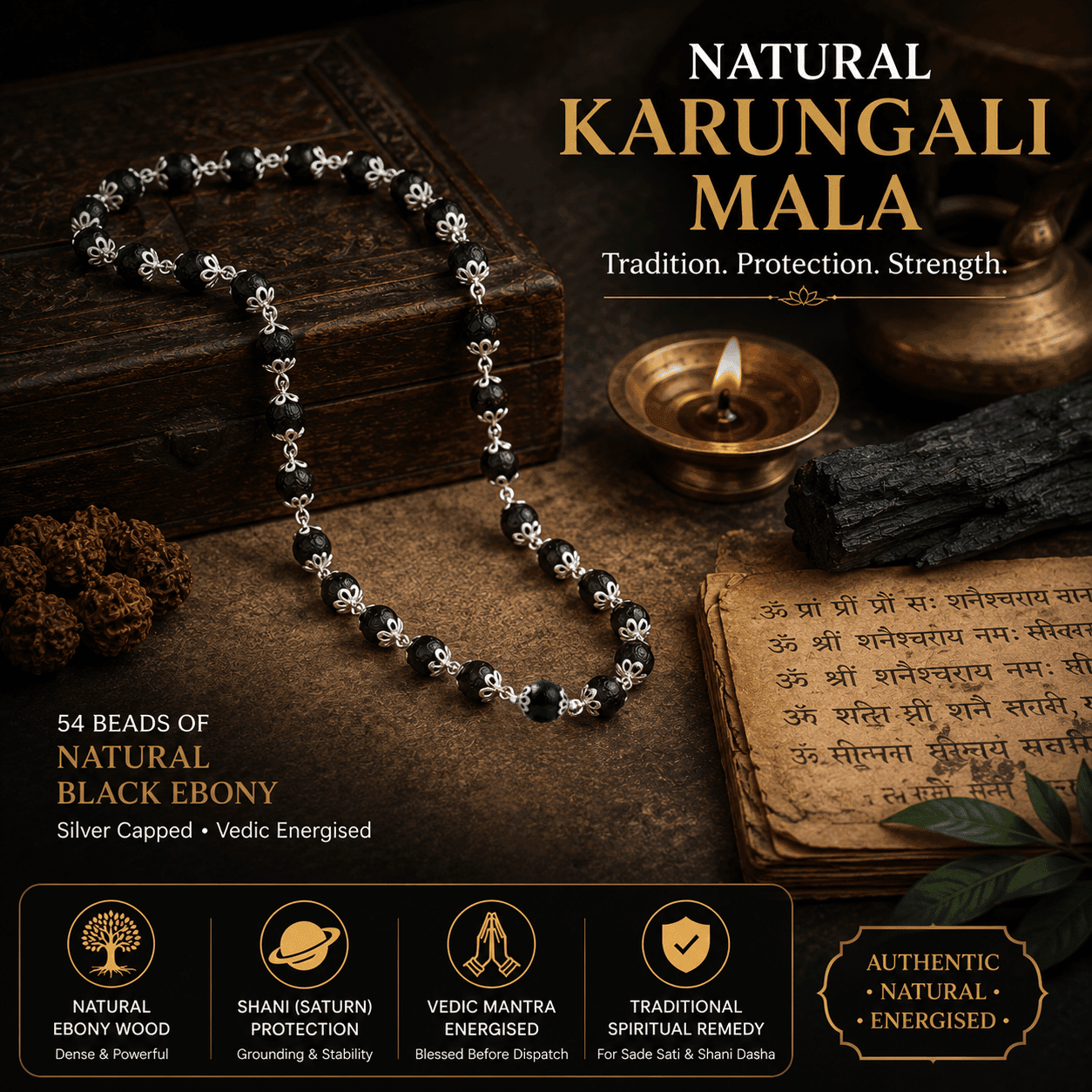
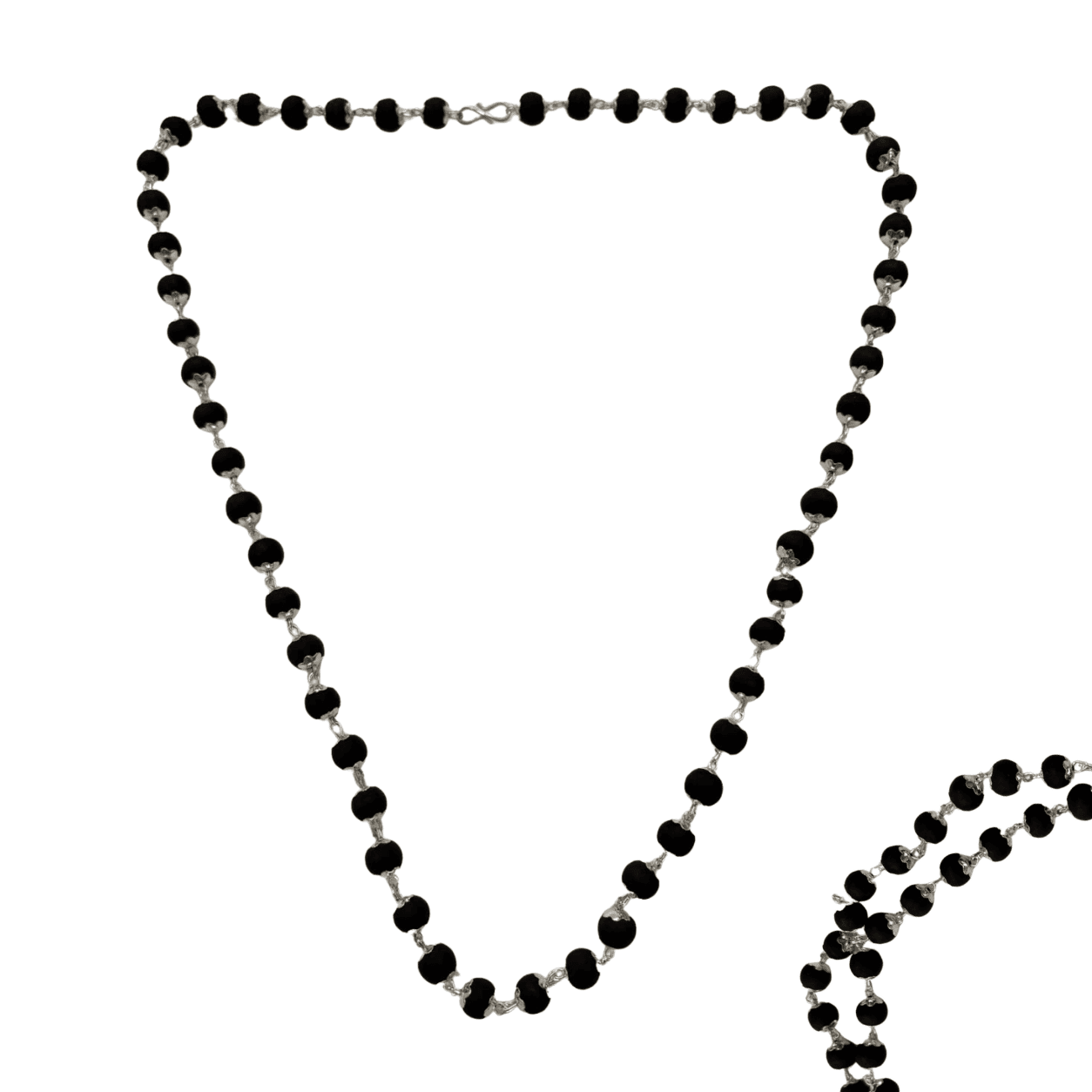
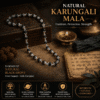
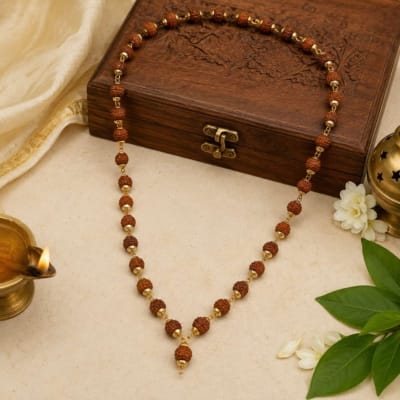
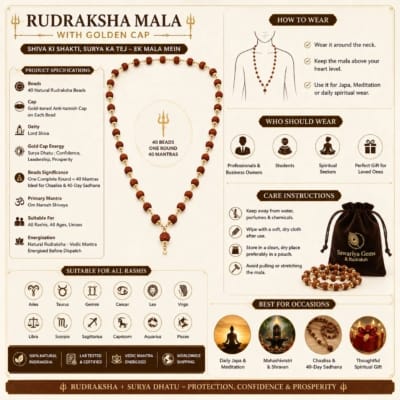
The Karungali Mala with Silver Cap, 54 natural Black Ebony wood beads with silver-capped ends, is one of the most trusted traditional remedies for Sade Sati, Shani Mahadasha, and Rahu Dasha in both South Indian Siddha tradition and Vedic astrology. Karungali is ebony, the same dense black hardwood used for fine carving. In South Indian and broader Vedic tradition it is linked to Shani (Saturn), the graha of discipline, karma and slow results.
There is a specific kind of difficulty that people in Sade Sati or Shani Mahadasha describe, not the sharp, sudden disruption of Rahu’s influence but something slower and heavier. Delays that build on delays. Efforts that produce less than they should. The feeling of working hard and remaining stuck. Plans that were moving well and then simply stalled. Most of the people who come to Sawariya Gems looking for a Karungali Mala are not panicking, they are tired. And they are looking for something that works with Saturn’s energy rather than against it.
The Karungali Mala with Silver Cap is exactly that. Fifty-four beads of natural Black Ebony, one of the densest natural materials on earth, with silver-capped ends that add the Chandra Dhatu dimension of emotional steadiness to the Saturn grounding the wood itself provides. Not a quick fix. A daily companion for the kind of sustained, patient effort that Shani rewards.
What Is Karungali Wood — The Science and the Tradition
The Karungali tree, primarily Diospyros ebenum, a species of ebony, grows slowly in the forested regions of South India and Sri Lanka, particularly in Tamil Nadu and Kerala. Its heartwood is among the densest natural materials on earth, so heavy that authentic ebony sinks immediately in water, a property that makes it easy to distinguish from fakes.
This physical density is not incidental. In Tamil Siddha tradition, one of the oldest continuous spiritual traditions in India- Karungali was understood as a living vessel of concentrated earth energy, dense, grounding, and possessing a natural capacity to absorb and transform harmful vibrations. Siddhars used it during deep meditation and tantric practices specifically for its aura-shielding qualities, believing it created a protective boundary between the practitioner’s energy field and external disturbances.
The word Karungali (கருங்காலி) itself is Tami- Karun meaning black or deep, Kaali meaning hard or strong. The name describes the wood’s most visible quality but points toward its energetic one: a depth and weight that does not yield easily to what presses against it.
In Ayurveda and Siddha medicine, ebony wood has long been recognised for anti-inflammatory properties and its balancing effect on the nervous system. Modern energy research supports the spiritual significance of natural woods like Karungali: ebony wood carries a mild electromagnetic charge that interacts with the human biofield, harmonizing internal energy flow.
Karungali and Shani (Saturn): The Primary Planetary Association
Karungali Mala is primarily for Saturn (Shani) and Rahu. The dense black heartwood resonates with both planets’ heavy, grounding and protective energy in Vedic astrology.
Shani, Saturn is the planet of karma, discipline, endurance, justice, and the slow but certain consequences of one’s actions. In a birth chart, a well-placed Saturn rewards sustained effort, builds lasting structures, and creates the kind of success that holds over decades. But when Saturn is afflicted, in transit over the natal Moon (Sade Sati), or in a Mahadasha or Antardasha, the experience is distinctly different, obstacles, delays, and a heaviness in daily life that resists easy resolution.
The most specific and astrologically-grounded use of Karungali Mala is as a Saturn remedy. During Sade Sati (Saturn’s 7.5-year transit over the natal Moon), Shani Dasha (Saturn’s major planetary period), or when Saturn is severely afflicted in the birth chart, wearing Karungali Mala is one of the most widely recommended traditional interventions. The mala does not eliminate Saturn’s karmic lessons — which are considered necessary for soul growth — but it substantially helps the wearer bear them with greater equanimity, reduced mental suffering, and less energetic depletion.
The physical weight of the Karungali beads is part of this mechanism. The physical density of the beads creates a tactile heaviness that many wearers describe as immediately grounding. For those whose minds tend toward restlessness, scattered thinking, or chronic low-level anxiety, the weight and texture of Karungali beads provide a constant sensory anchor — similar in mechanism to how Rudraksha’s bioelectric field interacts with the nervous system, but through the earthier, more stabilising quality of wood.
Karungali and Rahu: The Shadow Planet Connection
Rahu’s signature in a birth chart is different from Saturn’s but equally demanding, confusion, obsessive thinking, sudden and disorienting change, an intense hunger for experience that is never quite satisfied. Where Saturn creates heaviness, Rahu creates turbulence. Where Saturn delays, Rahu disorients.
Regular use of a Karungali Mala is believed to help calm Rahu’s influence, especially when used during mantra chanting and spiritual practices. The dense and grounding nature of Karungali (Black Ebony) wood makes it a popular choice for meditation and mantra chanting. Many practitioners report improved focus, reduced mental distractions, and a deeper meditation experience.
For those in Rahu Mahadasha (18 years) specifically, the Karungali Mala’s grounding, clarifying energy addresses Rahu’s most difficult quality: the confusion and scattered energy that make sustained effort feel impossible. Our complete Rahu Mahadasha guide covers the full picture of remedies for this planetary period, of which Karungali is one of the most traditional and accessible.
The Deity Connection: Shani Dev, Lord Murugan, and Lord Shiva
Karungali Mala is primarily associated with Lord Shani (Saturn) in Hindu tradition. The deep black color of ebony wood resonates with Shani Dev’s energy, helping to reduce malefic effects of Saturn in your horoscope. However, the mala also connects powerfully with Lord Murugan in South Indian traditions, Lord Shiva for meditation practices, Lord Ganesha for removing obstacles, and Goddess Kali for protection.
In Tamil spiritual tradition specifically, Lord Murugan (also known as Kartikeya, Shanmuga, or Subrahmanya) is deeply connected to Karungali wood. In Tamil Siddha traditions, Karungali is considered Lord Murugan’s favorite wood and is often used to carve his Vel (spear) and idols. The Pathala Sembu Murugan Temple in Dindigul district specifically offers Karungali malas that have been placed at the feet of Lord Murugan, believed to carry divine blessings.
This dual association — Shani Dev in the Vedic North Indian tradition, Lord Murugan in the Tamil Siddha South Indian tradition — makes Karungali one of the rare sacred materials that bridges two of India’s major spiritual lineages. Sawariya Gems respects both traditions equally in how this mala is energised before dispatch.
Why 54 Beads and Why the Silver Cap
The traditional japa mala has 108 beads — one complete count of any Vedic mantra yields 108 repetitions, a number with deep mathematical and cosmological significance in Vedic tradition. The 54-bead mala is half of 108 — designed for those who want to complete two rounds (one in each direction, returning at the Meru bead) to achieve the same 108-count practice, or for those for whom a 108-bead mala is too long to wear comfortably as a necklace throughout the day.
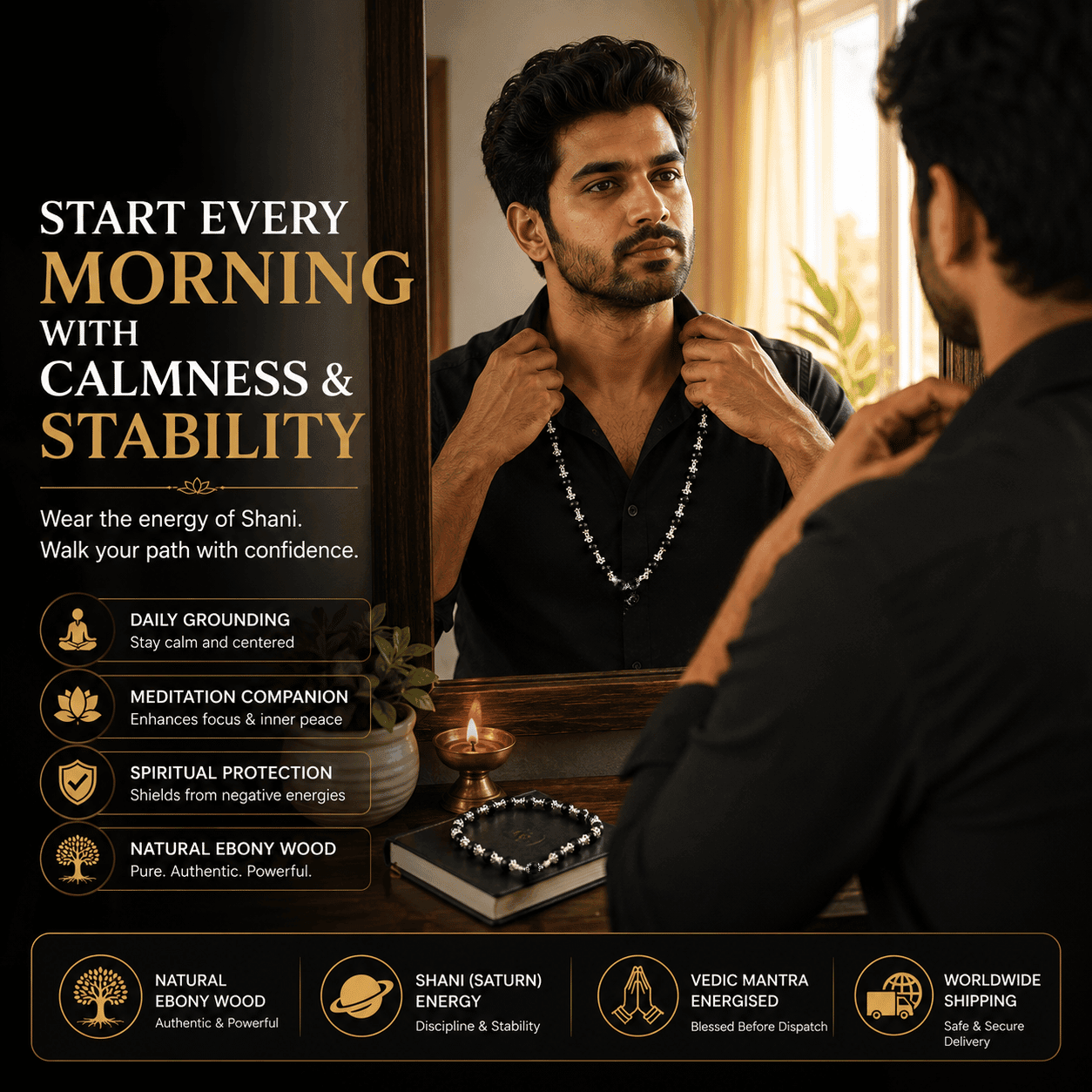
For daily wear as a necklace rather than a formal japa practice tool, 54 beads sits more comfortably at the sternum and hangs at the right length for most body frames — which is why 54-bead malas with a pendant-quality finish (like the silver caps on this version) are the most popular Karungali wearable format.
The silver caps (end caps placed on each bead) serve both aesthetic and energetic purposes. Silver is Chandra Dhatu — the Moon’s metal — in Vedic tradition. Chandra governs the mind, emotions, and the quality of inner steadiness. The combination of Saturn’s grounding wood with the Moon’s calming metal creates a dual planetary remedy: Karungali addresses the Saturn and Rahu heaviness directly, while the silver caps support the emotional balance and mental peace that Saturn’s difficult periods erode.
Who Should Wear the Karungali Mala with Silver Cap
People currently in Sade Sati: Saturn’s 7.5-year transit over the natal Moon and the two adjacent signs. This is the most widely recommended application of Karungali across virtually all Vedic astrology traditions. Read our complete Sade Sati guide to understand whether you are currently in this period and which phase you are in.
People in Shani Mahadasha: the 19-year Saturn planetary period, the longest of any Mahadasha in the Vimshottari system. The Karungali Mala as a daily companion for the full 19-year period is one of the most consistent traditional recommendations across Jyotish practitioners.
People in Rahu Mahadasha (18 years) or Rahu-Saturn or Saturn-Rahu Antardasha combinations: where both shadow planets create compounded difficulty that Karungali addresses through its dual Saturn-Rahu association.
Anyone seeking general daily protection from negative energy, buri nazar, and environmental negativity : Karungali Mala acts as an energy shield — it absorbs and neutralizes harmful vibrations, psychic attacks, and jealousy (drishti). Those in public professions, frequent travelers, or empaths especially benefit from its grounding and protective vibration.
Meditation practitioners and Yoga sadhaks who want a mala with natural grounding energy for sustained practice. The weight of genuine Karungali beads provides a tactile anchor during japa and meditation that lighter wooden or plastic malas cannot replicate.
Yes, for general protection and spiritual wear, anyone can wear Karungali Mala. Only for a specific Saturn or Rahu dasha remedy do you need to consult your birth chart and a Jyotishi first. For the chart-specific assessment of whether your situation warrants Karungali as a formal planetary remedy, use our free Janmpatri consultation.
How to Wear the Karungali Mala with Silver Cap
Auspicious first wearing day: Saturday (Shanivar) — Most powerful day for Saturn remedies. Amavasya (New Moon) — Sacred to both Saturn and Rahu. Shani Pradosh — The Pradosham that falls on a Saturday. Begin wearing after morning bath, during puja, with a sincere prayer to Lord Shiva or Lord Saturn.
Purification ritual before first wearing: Cleanse the Mala: Soak the mala in a mix of raw milk and rose water for 10 minutes. Dry in indirect sunlight for an hour. Place in front of a picture or idol of Lord Shiva or Lord Murugan. Chant the mantra: “Om Subrahmanyaya Namaha” or “Om Sham Shanicharaya Namah” — 108 times. Offer fruits, incense and perform Arati. Then wear the mala with the intention to absorb divine energy and protection.
For Shani mantra japa specifically: “Om Sham Shanicharaya Namah” — 108 repetitions using the 54 beads (two rounds). Practise on Saturday mornings during Saturn Hora for maximum effect.
Daily wear: Wear as a necklace throughout the day. The mala can be worn continuously except during the following: during the deceased’s cremation and mourning periods, during certain menstrual cycles if personal tradition observes restrictions, and when visiting places considered energetically heavy without specific intention to do so.
Minimum commitment: Traditional guidance recommends a minimum of 40 days of consistent, daily wear before assessing results. Saturn and Rahu are slow-moving planets — their remedies work gradually and steadily.
How to Identify Genuine Karungali Wood
The Karungali market has a significant proportion of imitations — dyed wood, resin, plastic, and pale-coloured wood painted black. Because genuine ebony is dense, slow-growing, increasingly regulated, and expensive, these imitations are widespread.
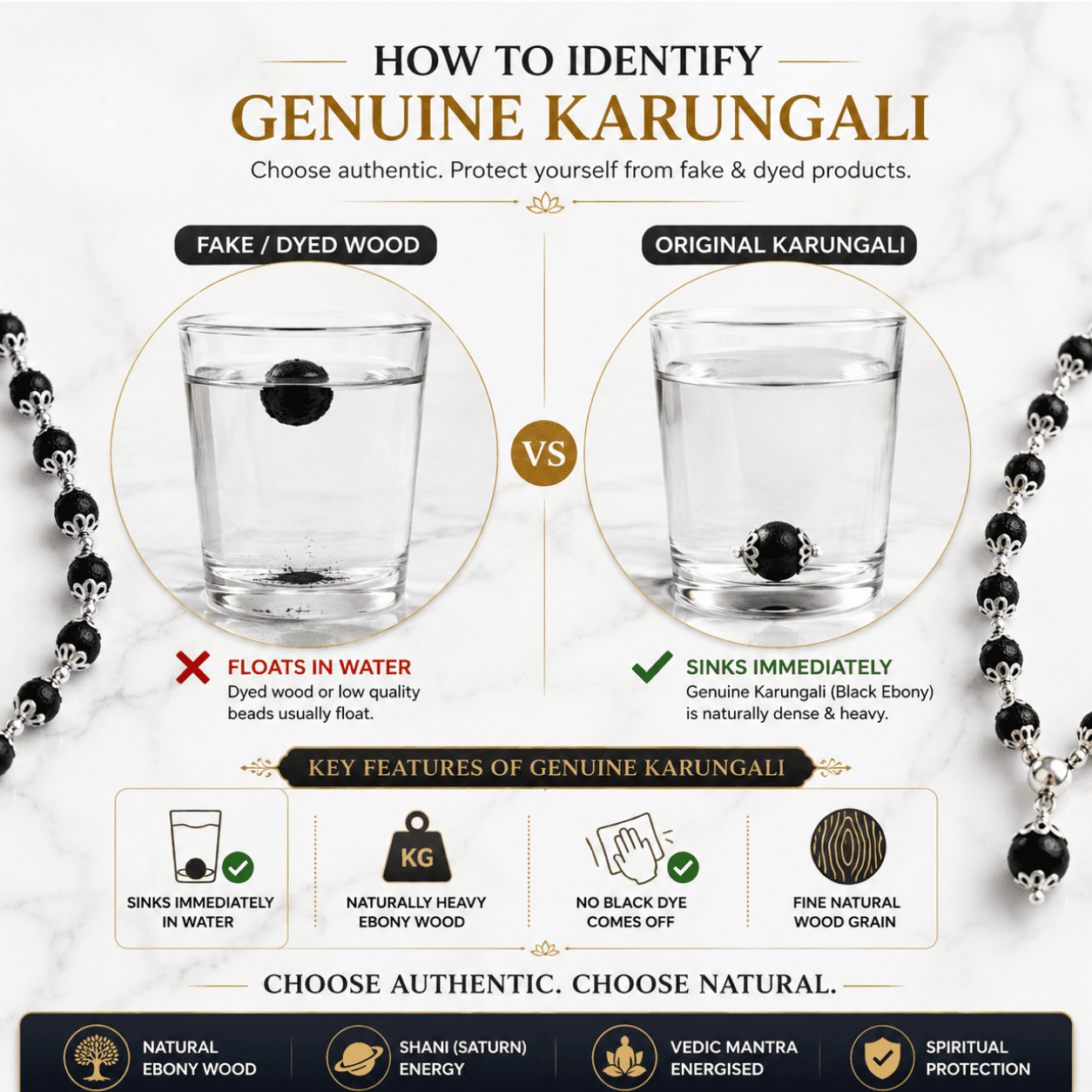
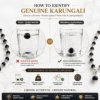
The water sink test: The heartwood of ebony is among the densest natural materials on earth — so heavy that authentic ebony sinks immediately in water, a property that makes it easy to distinguish from fakes. Drop a single loose bead into a glass of water. Genuine Karungali sinks to the bottom immediately and rests there. Fake wood, dyed wood, or resin imitations will float or sink slowly.
Weight test: Genuine Karungali beads feel noticeably heavier than any other wooden mala of the same bead size. If your Karungali mala feels as light as a Rudraksha or Tulsi mala of similar size, question its authenticity.
Dye test: Rub a damp white cloth firmly across two or three beads. Genuine Karungali wood has its black colour from the natural heartwood pigmentation — not dye. A dyed imitation will leave black residue on the cloth. Genuine Karungali will leave no colour.
Smell test: Real Karungali wood has a very faint, dry, slightly earthy woody smell when rubbed. Dyed or resin imitations often carry a faint chemical smell or no smell at all.
Grain visibility: Real stones take time to warm up — real wood similarly takes time to warm to body heat. The grain of genuine ebony, while very fine, is slightly visible under magnification — genuine Karungali has natural wood grain, whereas resin beads appear entirely uniform inside.
All Sawariya Gems Karungali Malas are sourced from natural ebony heartwood and are Vedic mantra energised before dispatch.
Care and Maintenance
- Wipe with a soft dry cloth after wearing : particularly after perspiration, which can dull the wood’s natural sheen over time
- Do not soak in water for cleaning : a brief water purification during ritual is different from sustained water exposure
- Store in the cloth pouch provided, away from direct sunlight :UV exposure can fade the wood’s deep black tone
- Keep away from perfume, lotion, and chemical contact :these can damage both the wood and the silver caps
- Cleanse energetically weekly by passing through incense smoke (dhoop or havan samagri) or placing on a Selenite plate overnight
- If the mala breaks: do not panic. Immerse the broken mala in a river or flowing water with a prayer. A broken mala is considered to have absorbed a significant amount of negative energy , treat it with respect rather than frustration
Pairs Well With
For those in Sade Sati or Shani Mahadasha, the Karungali Mala pairs most naturally with the 7 Mukhi Rudraksha, which addresses the same Shani energy through the Rudraksha tradition alongside this mala’s wood-based approach. The two remedies address the same planetary territory through different traditional pathways and reinforce each other.
For those whose protection needs are specifically Rahu-related rather than Saturn-primary, our Gomed (Hessonite), Rahu’s formal Nav Ratan gemstone — provides the deeper chart-specific Rahu remedy alongside this mala’s general Saturn-Rahu grounding.
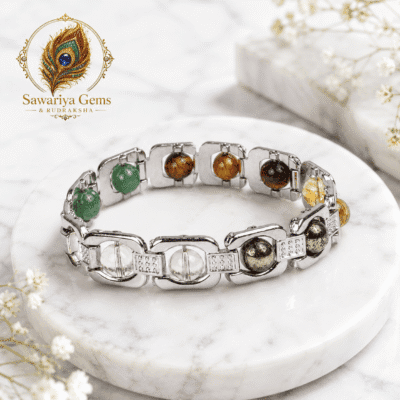
For those who want crystal-level protection alongside the mala, our Sulemani Hakik Bracelet (Black Chalcedony) and the Triple Protection Bracelet (Black Tourmaline, Hematite, Tiger Eye) address the same Saturn-Rahu protective territory through crystal means, worn on the wrist as the Karungali Mala is worn at the neck.
Not sure whether your situation calls for Karungali, 7 Mukhi Rudraksha, Gomed, or a combination? Our free Janmpatri consultation assesses your specific chart — current Dasha, Saturn and Rahu placement, and any relevant doshas — before recommending which combination is appropriate for your situation.
Frequently Asked Questions
What is a Karungali Mala?
A Karungali Mala is a prayer necklace made from the natural black heartwood of the Karungali tree (Diospyros ebenum), also known as Black Ebony. It is one of the most traditional remedies for Saturn (Shani) and Rahu in Vedic and Tamil Siddha spiritual practice, used for japa meditation, daily protection from negative energy, and as an astrological remedy during Sade Sati, Shani Mahadasha, and Rahu Dasha.
Why 54 beads and not 108?
The traditional japa mala has 108 beads. A 54-bead mala completes the equivalent of 108 when worn in two rounds during japa (moving in one direction and returning). For daily necklace wear, 54 beads is also more comfortable in length and weight than a full 108-bead ebony mala — which can be quite heavy given genuine Karungali’s exceptional density. Two rounds of the 54-bead mala during mantra japa is the standard practice for achieving the 108-count.
Why does this Karungali Mala have silver caps?
Silver is Chandra Dhatu — the Moon’s metal — in Vedic tradition. Adding silver caps to Karungali beads combines Saturn’s grounding and discipline energy (from the wood) with the Moon’s calming and emotionally steadying influence (from the silver). During Sade Sati specifically — which is Saturn transiting the Moon and adjacent signs — this combination of Saturn-wood with Moon-silver is particularly relevant, addressing both the planetary challenge and the emotional turbulence it creates.
Can women wear the Karungali Mala?
Yes — absolutely. There are no gender restrictions on Karungali Mala. Women experiencing Saturn or Rahu difficulties, or simply seeking grounding and protection, benefit equally from this mala as men. It can be worn as a necklace or bracelet. The silver cap version is particularly suitable for women as the silver finish complements most daily outfits without appearing conspicuously spiritual.
Which Rashi can wear Karungali Mala?
For general spiritual protection and daily wear, Karungali is safe for all zodiac signs without a birth chart assessment. For use as a specific astrological Saturn or Rahu remedy, Makar (Capricorn), Kumbha (Aquarius), Mithun (Gemini), Kanya (Virgo), Tula (Libra), and Vrischik (Scorpio) Rashis are generally considered most suitable. Mesh (Aries), Simha (Leo), Karka (Cancer), and Dhanu (Sagittarius) Rashis should confirm with a Jyotishi before using it as a primary planetary remedy. Use our free Janmpatri consultation for a chart-specific assessment.
How long before I notice results from Karungali Mala?
Traditional guidance recommends a minimum of 40 days of continuous daily wear before assessing results. Saturn and Rahu are the two slowest-moving planets in the Vedic system — their remedies work gradually and steadily rather than immediately. Many wearers notice subtle shifts in emotional calm and a reduction in the background mental heaviness characteristic of Saturn’s difficult periods within the first two to three weeks. More significant astrological relief typically becomes apparent after 40 to 90 days of consistent wear and practice.
What mantra should I chant with the Karungali Mala?
For Shani remedy: Om Sham Shanicharaya Namah — 108 repetitions (two rounds of the 54-bead mala). For Lord Murugan (particularly relevant in South Indian tradition): Om Subrahmanyaya Namah — 108 repetitions. For Lord Shiva, with whom Karungali is also deeply associated: Om Namah Shivaya — 108 repetitions. Saturday mornings during Saturn Hora are the most auspicious time for Shani mantra japa with this mala.
The Karungali Mala with Silver Cap is a traditional spiritual and astrological remedy product rooted in Vedic and Tamil Siddha tradition. It is not intended to diagnose, treat, or cure any medical or psychological condition. Individual experiences may vary.




Reviews
There are no reviews yet.