
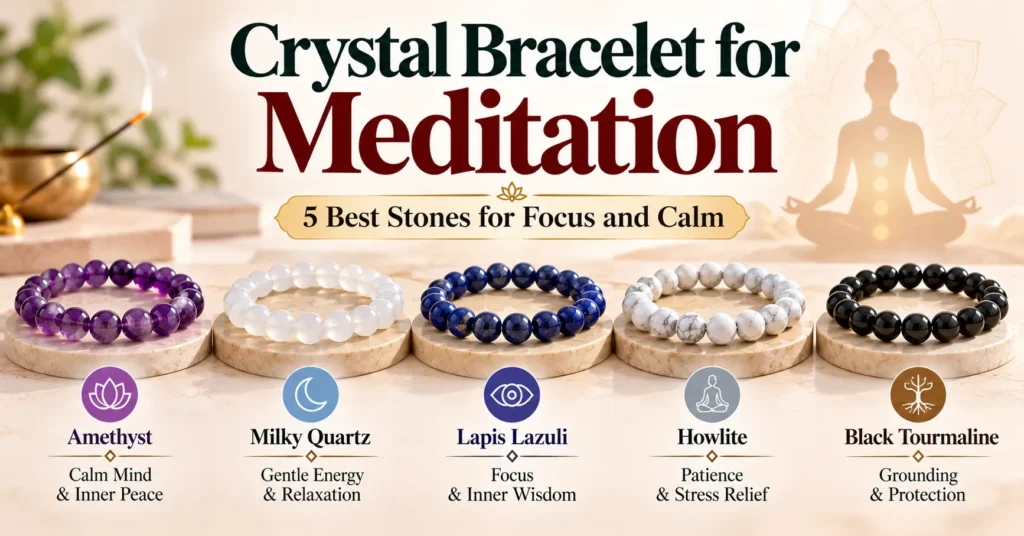
A crystal bracelet for meditation will not meditate for you, but it can make sitting down to practise easier and more consistent. Many people find that the mind settles faster when there is something steady to return to, and a crystal bracelet for meditation gives the hands and wrist a quiet anchor while the attention does the real work. The right stone also supports the Crown and Third Eye Chakras, the energy centres Vedic tradition connects with stillness, insight and spiritual depth.
The short answer: Amethyst (Jamunia), Milky Quartz (Dudhi Sphatik), Lapis Lazuli, Howlite and Black Tourmaline are the five most useful stones for a crystal bracelet for meditation. Amethyst suits most people as a first choice, Milky Quartz and Howlite suit restless beginners, Lapis Lazuli suits mantra and inner inquiry, and Black Tourmaline keeps you grounded.
How a Crystal Bracelet for Meditation Actually Helps
It helps to be clear about what is happening. Meditation is a trained skill, and no stone replaces the hours of practice. What a crystal bracelet for meditation does is support the conditions around that practice.
First, it works as a physical cue. Putting on the same bracelet before every session tells your mind that it is time to settle, the same way a particular cushion or time of day does. Over weeks, that habit becomes a trigger, and sitting down gets easier. Second, the wrist contact gives the body a gentle point of attention if the mind starts to wander. Third, in the Vedic framework, each stone carries a planetary and Chakra quality that many practitioners find supports a particular kind of stillness. People differ in how strongly they feel this, and it is fine to treat it as a supportive ritual alongside the practice itself.
The 5 Best Stones for a Crystal Bracelet for Meditation
1. Amethyst (Jamunia) for Overall Stillness
Amethyst is the most widely used meditation crystal, and the reason is its Crown (Sahasrara) and Third Eye (Ajna) Chakra focus. It carries Shani’s (Saturn’s) disciplined, calming energy, which supports the quality of steady, unforced attention that meditation builds. It is especially useful when the mind is busy and replays the day, and it is the best single stone to start with. The full profile is in the Amethyst Bracelet Benefits guide.
2. Milky Quartz (Dudhi Sphatik) for Gentle Crown Chakra Calm
Milky Quartz carries Chandra’s (Moon’s) soft, cooling energy at the Crown Chakra. It is gentler than Amethyst and suits people who find stronger stones a little intense. It is also a good choice for evening sessions, when the aim is to wind down and let the day go. Because it works quietly, it is easy to wear all day.
3. Lapis Lazuli for Mantra and Inner Inquiry
Lapis Lazuli activates the Throat (Vishuddha) and Third Eye (Ajna) Chakras and carries Shani and Budh energy. It suits practices that involve chanting, mantra repetition (japa) or reflective inquiry, since it supports both the voice and the inner eye. Note that Lapis Lazuli should not be rinsed in water, so cleanse it in moonlight or with dry salt.
4. Howlite for Restless and Impatient Beginners
Howlite is known as the Stone of Patience. It supports the Crown Chakra with a calming, slowing quality, which helps people who get fidgety, irritable or bored within minutes of sitting. If your main difficulty is simply staying seated, Howlite is a kind and practical choice.
5. Black Tourmaline for Grounding
Deep practice can leave some people feeling spacey, light-headed or unprotected afterward. Black Tourmaline works at the Root Chakra to keep you grounded and shielded, so the opening above is balanced by stability below. Many experienced meditators wear it together with Amethyst. The crystal bracelet for anxiety guide explains how the two work together.
Which Stone for Which Meditation Goal
| Meditation Goal | Best Stone | Chakra | Planet |
|---|---|---|---|
| General stillness and a busy mind | Amethyst (Jamunia) | Crown and Third Eye | Shani |
| Gentle evening wind-down | Milky Quartz (Dudhi Sphatik) | Crown | Chandra |
| Mantra, japa and inner inquiry | Lapis Lazuli | Throat and Third Eye | Shani and Budh |
| Restlessness and impatience | Howlite | Crown | Chandra |
| Feeling spacey or unprotected after practice | Black Tourmaline | Root | Rahu and Shani |
Pairing Stones for Deeper Practice
A single bracelet is enough for most people. For a longer-term practice, a simple two-stone setup works well: one stone for the Crown or Third Eye (Amethyst or Milky Quartz) and one for grounding (Black Tourmaline). Wear both on the left wrist, which receives and draws the stone’s energy inward. This follows the same logic as the three-layer method in the crystal bracelet stack guide.
If you want a single bracelet that covers the whole Chakra column, the 7 Chakra Bracelet is a sensible option, and the 7 Chakra Bracelet guide explains which stone sits at each centre.
How to Wear a Crystal Bracelet for Meditation
Wear it on the left wrist, the receiving side in Vedic tradition. If you hold a mala in the right hand for japa, the left wrist is also the natural place for the bracelet, so the two do not interfere.
Choose the day by the stone’s planet. Thursday (Guruvar) is the day of the teacher and suits any spiritual beginning. Monday (Somvar) suits Milky Quartz and Howlite, and Saturday (Shanivar) suits Amethyst and Lapis Lazuli. The quietest time for practice is Brahma Muhurta, the pre-dawn period roughly an hour and a half before sunrise, though any consistent time you can keep is better than an ideal time you skip.
Cleanse the bracelet on Purnima (full moon) in moonlight, and check each stone against the crystal bracelet cleaning guide before using water.
A Simple 10-Minute Routine
- Wash your hands and face, and sit in a quiet spot with your spine upright and comfortable.
- Hold the bracelet in both palms for about thirty seconds and breathe slowly three times.
- Set one plain intention, such as “I stay present and I let thoughts pass.”
- Put the bracelet on the left wrist and set a timer for ten minutes so you are not watching the clock.
- Close your eyes, rest your attention on the breath, and silently repeat Om if you like. When the mind wanders, return to the breath without scolding yourself.
- When the timer ends, sit for another minute, then open your eyes slowly and notice how you feel.
Short, regular sessions build the habit better than a long session once in a while. Ten minutes daily is a stronger foundation than an hour once a week.
Rudraksha and Crystal Bracelets in Meditation
In Indian practice, a Rudraksha mala is the traditional companion for japa, while a crystal bracelet supports the Chakra and planetary side. The two complement each other, and many practitioners use a Rudraksha mala for mantra counting and a crystal bracelet for stillness. The Rudraksha guides on your site cover this in detail. [Verify before publishing: add links to your 5 Mukhi Rudraksha and Rudraksha wearing rules blogs]
Common Mistakes to Avoid
The biggest mistake is expecting the stone to do the work. A crystal bracelet for meditation supports a practice you still have to do. Other common errors include wearing too many stones at once, which makes it harder to notice what helps; skipping grounding when practice leaves you light-headed; and never cleansing the bracelet, which lets it carry the residue of a busy week. Keep the setup simple, stay consistent, and give any stone at least three to four weeks before judging it.
Frequently Asked Questions
Which crystal bracelet is best for meditation?
Amethyst (Jamunia) is the best crystal bracelet for meditation for most people because it supports the Crown and Third Eye Chakras and brings a calm, steady quality. Milky Quartz and Howlite suit restless beginners, Lapis Lazuli suits mantra and inquiry, and Black Tourmaline helps with grounding.
Which wrist should I wear a meditation bracelet on?
Wear a crystal bracelet for meditation on the left wrist. The left side is the receiving side in Vedic tradition, drawing the stone’s energy inward, and it leaves the right hand free for a mala if you use one.
Can a crystal bracelet improve concentration?
A crystal bracelet for meditation can support concentration by acting as a consistent cue and by carrying a calming Chakra quality, but it works together with practice. Many people find that wearing the same stone before each session helps the mind settle faster. The results build gradually over weeks of regular use.
Should I wear the bracelet or hold the crystal during meditation?
Either works. Wearing the bracelet keeps your hands free and gives a steady wrist contact, while holding the stone in your left palm gives a stronger tactile focus. Try both for a week each and keep whichever helps you stay present.
How long before a meditation crystal makes a difference?
Some people notice a calmer start to their sessions within the first week, mainly from the ritual of putting the bracelet on. Deeper changes in focus and stillness usually take three to six weeks of consistent practice. Regular sessions matter more than the choice of stone.
To find the stone best aligned with your Rashi, Lagna and current planetary period, use the free Janmpatri consultation at Sawariya Gems.
Crystal healing is a traditional Vedic wellness practice. A crystal bracelet for meditation provides energetic and ritual support for your practice and is not a substitute for guidance from a qualified teacher or for professional care for any health condition.